Tesla pushes robot delivery date to late 2027
Elon Musk admits that durability and hand design issues have forced a delay in shipping Tesla's Optimus robots to outside companies.
By Mei Ling ·
The target for delivering Tesla’s Optimus humanoid robots to external customers has shifted to the end of 2027, a date that now sits several years away from earlier promises. During the company’s Q3 2026 earnings call, Elon Musk acknowledged that significant hurdles remain before the machines can be sold to outside firms. The delay is attributed to ongoing challenges with the robot’s hands, its overall durability, and the artificial intelligence that drives its actions.
These issues are not unique to Tesla, but they represent the core difficulties facing every major player in the humanoid robotics sector. Despite Musk’s assertion that no other company is close to matching Tesla’s progress, competitors like XPeng and Hyundai’s Boston Dynamics appear to be at least as far along in their development timelines. The pushback in Tesla’s schedule highlights the gap between the rapid pace of announcement and the slower reality of engineering reliable, general-purpose machines.
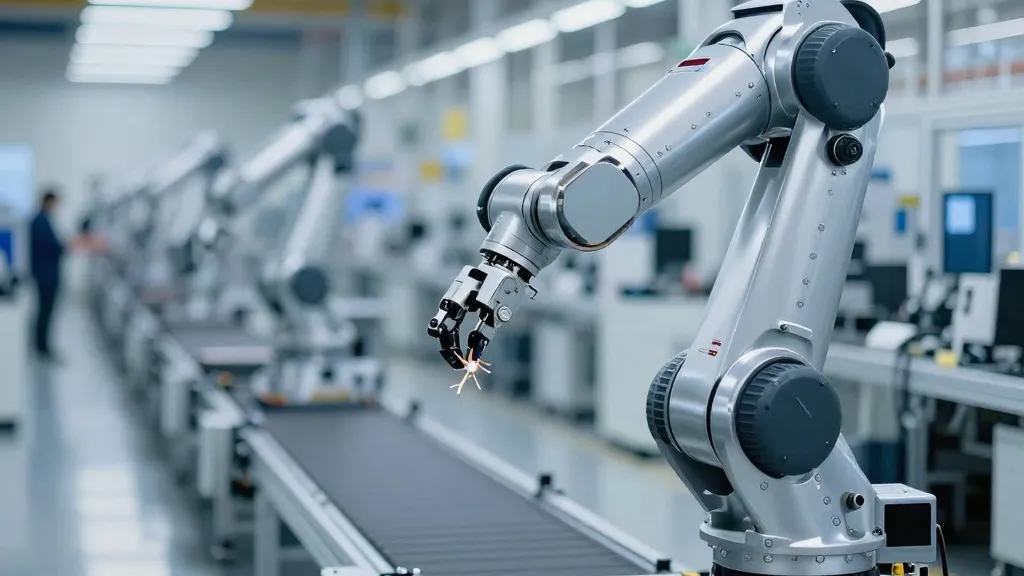
Production of the Optimus has begun on a high-volume line in Fremont, a facility previously used for building Model S and Model X vehicles. While most of the infrastructure designed to support a potential annual output of one million units is already installed, Musk stated that reaching that capacity will take at least another year. He noted that the current rate is roughly 20,000 units per week, but the design is still undergoing changes that prevent the line from running at full speed. The initial external deliveries are expected to focus on industrial applications that involve dangerous, repetitive, or continuous work.
The primary hardware bottleneck is the robot’s hand. A Tesla engineer identified the hand and custom gears as the most difficult components to finalize. Musk explained that the fingers must be soft enough to handle delicate objects yet tough enough to withstand constant wear, a challenge complicated by the fact that robots cannot heal like human skin. This mechanical fragility, combined with reliability concerns in the electromechanical design, is keeping the robot from being ready for widespread use.
On the software side, Tesla is still refining its AI architecture. Unlike its car fleet, which generates vast amounts of data for its Full Self-Driving system, Tesla does not yet have a large fleet of robots collecting real-world data. To address this, the company plans to build between 10,000 and 20,000 robots and use them to practice tasks in a facility it calls an Optimus Academy. Additionally, the AI5 chip is scheduled to be integrated into the Optimus around April 2027. Musk promised a video within the next month or two showing the robot performing unscripted tasks, arguing that many current demos rely on pre-programmed routines that would fail in real-world conditions.
This is not the first time Tesla has faced these specific hurdles. Recent reports indicated that the robots had reached a production rate of hundreds of units per week but struggled to generalize to new tasks. The hand and forearm reportedly contained over 100 small parts assembled by hand, with touch sensors facing reliability issues. The company’s own shareholder letter now describes the current output as the first "production-quality" bots, implying that previous units did not meet that standard. The timeline has slipped repeatedly, moving from an internal use target of 2025 to a high-volume external target that is now set for late 2027.
Competitors are making steady progress that challenges Tesla’s claim of a clear lead. XPeng activated an automated production line in Guangzhou in September, with over 80% of core processes automated. Its IRON robot features 21 degrees of freedom in each hand and runs on in-house chips. XPeng aims for mass production by the end of 2026 and deliveries in the first half of 2027, a schedule similar to or slightly ahead of Tesla’s. Meanwhile, Boston Dynamics began producing its electric Atlas in January and has already committed all its 2026 deployments, including to Google DeepMind. The company opened a training center in Georgia in September, where Atlas is learning to sequence car parts for Hyundai’s assembly line.
The stakes for Tesla are high as it tries to prove that building robots is not the hard part, but making them useful is. While Tesla may have built the most units, its competitors are taking different approaches to the same problems. Boston Dynamics, for instance, has prioritized sturdy grippers for industrial parts over human-like dexterity, offering a pragmatic solution to the hand issue that Tesla cites as its main obstacle. With electricity rates climbing and the demand for automation growing, the race to deliver reliable, general-purpose robots is intensifying. If Tesla’s upcoming video shows unscripted work, it would be a significant step forward, but the repeated slipping of timelines suggests that late 2027 may be another target rather than a guarantee.
Source: Electrek