Apple's $399 Pocket Revolution Marks 25-Year Anniversary
Two decades and five years ago, a compact hard-drive device fundamentally reshaped how consumers carried and listened to music.
By Khalid Rahman ·
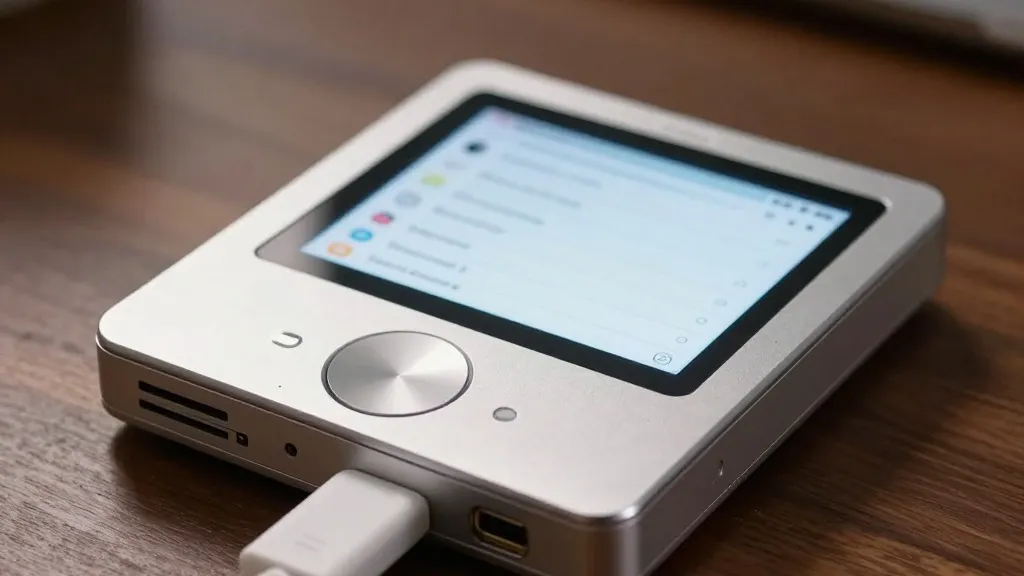
The tension between massive storage capacity and extreme portability was finally resolved on this day in 2001, when Apple CEO Steve Jobs introduced a device that would dominate personal electronics for over a decade. The conflict was simple: how to fit an entire music library into a package small enough to fit in a pocket without sacrificing sound quality or ease of use. The solution was a 5-gigabyte hard drive that allowed users to carry 1,000 songs for $399, a price point that challenged established competitors and set a new standard for consumer electronics.
To understand the significance of this launch, one must look at the timeline leading up to the event. Apple had already stabilized its fortunes following the dot-com bubble burst, successfully transitioning from beige computers to the sleek Mac OS X era. Products like the iBook and iMac were well-established, creating a consumer base eager for the next innovation. Jobs had previously envisioned the Mac as the central hub for a digital lifestyle, connecting cameras, camcorders, and DVD players. He identified portable music as the missing piece, noting that while companies like Sony, Creative, and Sonic Blue had products on the market, none had found the right formula for digital music consumption.
The device revealed that day was an MP3 player with CD-quality audio support for formats including MP3, WAV, and AIFF. The core appeal was its 5GB capacity, which Jobs explained could hold 1,000 typical pop songs encoded at 160Kbps. He argued that for most people, this represented their entire music collection. The hardware was made possible by Toshiba’s latest technology, specifically a 1.8-inch hard drive that was only 0.2 inches thick. This component allowed the final device to measure 2.4 by 4 by 0.78 inches, roughly the size of a deck of cards, and weigh just 6.5 ounces. Jobs emphasized that it was lighter than most cell phones of the era, making it highly desirable for on-the-go use.
Performance was a key differentiator, particularly regarding transfer speeds. The device utilized a FireWire 400 connection, which Jobs claimed was the first and only music player to feature it. This connection allowed for the transfer of an entire CD’s worth of data in five to 10 seconds, a stark contrast to USB connections of the time, which could take up to five minutes for the same task. Filling the entire 5GB capacity with 1,000 songs was estimated to take only 10 minutes, whereas a USB-based competitor might require five hours. The device also featured 20-minute skip protection and a rechargeable lithium-polymer battery that provided 10 hours of continuous playback, with an 80% charge achievable in one hour.
Design and usability were central to the product’s identity. Jobs highlighted the minimalistic and durable construction, emphasizing Apple’s legendary ease of use. The controls were designed for single-hand operation, featuring an accelerated scroll wheel with a piezoelectric clicker for tactile feedback. This allowed users to quickly navigate playlists, artists, or specific songs. During the presentation, the first track demoed was 'Building a Mystery' by Sarah McLachlan, showcasing the device's interface and sound quality to the audience.
The launch was also synchronized with the release of iTunes 2, which introduced advanced features like MP3 CD burning and syncing support. The Auto-Sync feature ensured that any library curated on a Mac would remain perfectly synchronized with the portable player whenever it was connected for charging or data transfer. Additionally, the device could function as a FireWire hard disk drive, adding another layer of utility to its primary role as a music player.
Looking ahead, the device would sit alongside the iPhone, which launched in early 2007, for over a decade. However, the rise of smartphones eventually made dedicated music players redundant. The product line continued until the 7th-generation iPod Touch in May 2019, though it was officially discontinued in May 2022. As the industry moves forward, this anniversary marks the moment when a small, hard-drive-based player changed the audio landscape forever, proving that convenience and capacity could coexist in a single, affordable package.
Source: Tom's Hardware